
Agriculture is becoming smarter and more efficient with the use of modern drone technology.
Today, many farms use drones for spraying pesticides, spreading fertilizers, monitoring crops, mapping farmland, and improving productivity.
Different types of drones are designed for different agricultural tasks, and choosing the right one depends on the size of the farm, crop type, and operational needs.
Among the leading brands in modern farming technology, YJtech Drones offers advanced agricultural drones designed for precision farming, crop protection, and smart farm management.

These drones help farmers reduce labor costs, improve spraying accuracy, and increase crop yields.
Rotary-wing drones are the most commonly used drones in agriculture. These drones use multiple rotors to fly and hover steadily over crops. They are ideal for spraying pesticides and fertilizers because they can fly at low altitudes and provide precise coverage.
Quadcopters have four rotors and are popular among small and medium-sized farms. They are easy to operate, affordable, and suitable for light agricultural spraying tasks.
Features include:
Hexacopters use six rotors and provide greater stability and higher payload capacity compared to quadcopters. Many professional farmers choose hexacopters for larger spraying operations.
Features include:
Octocopters have eight rotors and are designed for heavy-duty agricultural work. These drones can carry larger payloads and spray large fields quickly.
Features include:
Many YJtech Drones agricultural spraying models are designed using multi-rotor systems because of their excellent hovering ability and spraying precision.
Fixed-wing drones look similar to small airplanes. Instead of hovering, they glide through the air and cover large farming areas quickly. These drones are mainly used for mapping, crop monitoring, and surveying large agricultural lands.
Advantages include:
However, fixed-wing drones usually require open space for takeoff and landing.
Hybrid drones combine the advantages of rotary-wing and fixed-wing drones. They can take off vertically like helicopters and then switch to fixed-wing flight for longer-distance operations.
Benefits include:
Hybrid drones are becoming increasingly popular in precision agriculture because they provide both flexibility and efficiency.
Crop monitoring drones are equipped with advanced cameras and sensors. These drones help farmers monitor crop health, irrigation conditions, pest damage, and plant growth.
Modern monitoring drones from YJtech Drones may include:
These technologies help farmers make better decisions and improve overall farm management.
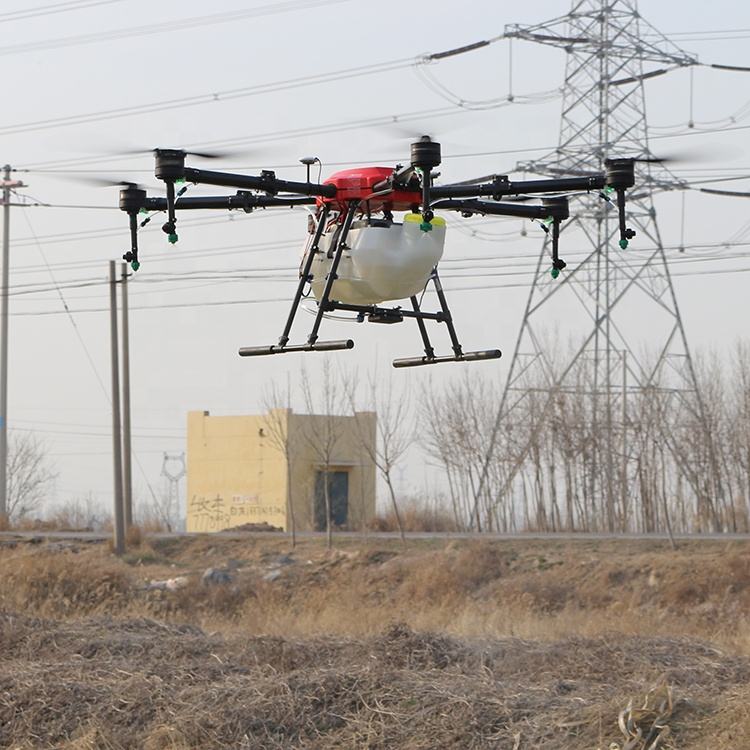
Spraying drones are specially designed for applying pesticides, herbicides, and fertilizers. They use precision nozzles and intelligent flight systems to ensure even spraying across crops.
Advantages of spraying drones include:
Agricultural spraying drones are now widely used in rice farms, corn fields, orchards, vineyards, tea plantations, and vegetable farms.
Many farmers choose YJtech Drones because of their advanced technology, reliable performance, and user-friendly systems. Their drones support precision agriculture and help improve productivity while reducing operational costs.
Key benefits include:
As drone technology continues to develop, agricultural drones are becoming one of the most important tools in modern farming. They help farmers work faster, safer, and more efficiently while supporting sustainable agriculture and higher crop yields.

Join YJTech Drones Newsletter to get more information of different Industrial Drone & UAV in China.


